
Every water utility faces the same challenge. Water disappears between the treatment plant and the customer’s meter.
Some losses you can see, the main breaks that flood streets. But most losses are invisible. Small leaks in aging pipes. Pressure fluctuations causing bursts.
Revenue vanishing before it reaches your accounts. Traditional approaches wait for problems to surface. Then you react.
AI changes this. It turns overwhelming data into clear answers about where to focus your resources.
From Data Overload to Smart Decisions
Modern water networks generate massive amounts of data.
Smart meters send readings every hour. Pressure sensors track fluctuations across zones. SCADA monitors flows throughout your system.
But raw data isn’t helpful unless you use it. You need it to tell you: “This pipe will fail next month” or “Check this zone for leaks today.”
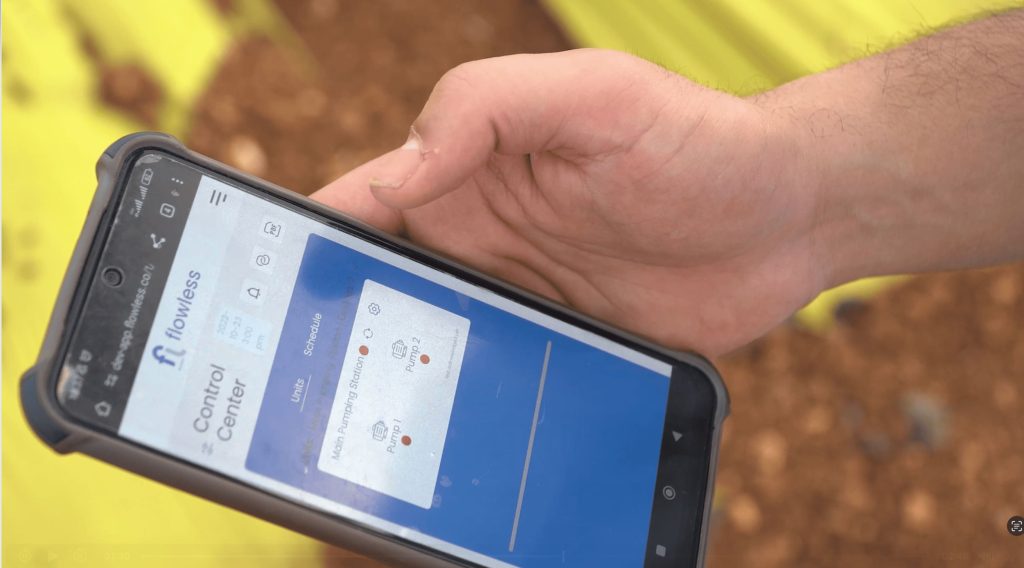
The AI breakthrough in the water sector helps you make use of the huge amount of data you have. It does the analysis and provides you with exactly what you need without any hassle.
Real Results from Brazil
Alexandre Marques manages operations for SABESP’s Eastern Regional Directorate in Brazil.
When they deployed Octopo (Flowless’s AI agent), the system started identifying network problems fast.
“The agility of the software and fast detection of anomalies helped in faster decision making,” Alexandre says.
The result? They reduced water loss by 9% in that pilot area. The difference wasn’t working harder. It was seeing clearly where to focus.
How AI Actually Finds Network Leaks
Think about traditional leak detection. Survey crews walk zones with acoustic equipment. They cover large areas zone by zone.
But most zones they check have no leaks. Hours spent searching where nothing’s wrong. AI changes this approach entirely.
Prioritizing Where Leaks Actually Are
Flowless platform analyzes pressure data, flow patterns, network characteristics, and historical leak locations.
Then it identifies zones with the highest likelihood of leakage. Your crews still do the hands-on detection work. They just focus on areas where leaks actually exist.
Same teams, same equipment, and better results. Because they’re spending time where problems are, not ruling out clean areas.
Making Acoustic Monitoring Smarter
Fixed acoustic sensors listen for leaks frequently. They send alerts when they detect suspicious sounds. The problem? Not every alert is a real leak.
Traffic noise, construction, and water hammer, they all trigger false alarms. Your teams investigate, find nothing, move on.
AI algorithms learn the acoustic signature of actual leaks. Water escaping under pressure sounds different from background noise.
When the system sends an alert, it tells you the confidence level. High possibility? Worth investigating. Likely false? Focus elsewhere.
Your crews spend less time chasing nothing and more time fixing real problems.
Understanding Pressure and Leakage
Everyone knows high pressure increases leakage. But the relationship is complex and varies across your network.
Plus, pressure transients, spikes that last just seconds, cause damage over time. If you only look at average daily pressure, you’ll never see them.
AI analyzes high-resolution pressure data alongside flow information. It reveals patterns you’d miss otherwise. Like regular transients at specific times causing pipe stress. Or zones where pressure optimization could significantly reduce background leakage.
One utility discovered through AI analysis that certain zones had pressure spikes during specific hours. Nobody knew because manual reports didn’t capture them.
Once they addressed those transients, pipe bursts in those zones dropped significantly.
Predicting Which Pipes Will Fail
Here’s a question every utility faces: which pipes should you replace first?
Age-based replacement sounds logical. But a 60-year-old pipe in stable soil might be fine. A 30-year-old pipe in corrosive conditions could fail next month.
Machine learning analyzes thousands of factors simultaneously. Pipe material, diameter, soil type, break history, weather patterns, surrounding infrastructure.
It learns which combinations actually lead to failures. You get a ranked list based on real risk. Not assumptions.
Once you have shifted from age-based to risk-based replacement. Same budget. Emergency repairs dropped significantly because they targeted the right pipes.
Testing Strategies Before Spending Money
Should you deploy more acoustic sensors? Increase survey frequency? Change your pressure management approach?
These decisions usually rely on educated guesses. Simulation modeling lets you test strategies virtually first.
You create a digital model where leaks, repairs, sensors, and crews behave like real ones. Then you run different scenarios, months of operations in minutes.
Want to compare quarterly surveys versus monthly? Run both scenarios. Curious if more fixed sensors justify the cost versus mobile surveys? Test it.
You see how strategies perform before committing real resources.
Finding Revenue Hidden in Meters
Not all non-revenue water comes from pipes leaking. Meters that read low cost you money too. But which meters are the problem?
You’ve got thousands of meters. Most work fine. But scattered throughout are meters degrading, under-registering consumption, and bleeding revenue.
Machine learning spots consumption patterns that signal meter problems.
A commercial account that historically showed 10,000 gallons monthly now shows 3,000? With no business changes? The meter likely needs attention.
A residential meter with a sudden drop on a specific date? Probably mechanical degradation.
These patterns hide in your billing data. AI finds them and prioritizes which meters to test or replace based on likely revenue recovery.
What This Means for Your Operations
This isn’t about replacing your teams with computers. It’s about making your teams more effective. Field crews still find and fix leaks. They just know where to look instead of searching blindly.
Engineers still manage pressure. They just see what’s actually happening across the network, including events they’d never catch manually.
Planners still decide which pipes to replace. They just have real risk data instead of hunches.
Alexandre at SABESP captures it well:
“It is a tool that enables real-time monitoring of water supply systems, identifying critical areas for action in reducing losses, optimizing resources, and maximizing impact.”
That’s the core value. Optimize resources. Maximize impact. See what needs attention instead of guessing.
Making This Work at Your Utility
Utilities that succeed with AI for leak detection share common patterns:
- Start with a specific problem. Pick something concrete, reduce emergency breaks, find leaks faster, and optimize pressure management. Don’t start with “implement AI.” Start with what you’re trying to fix.
- Make sure your data infrastructure supports it. AI needs quality data from meters, pressure sensors, and water flow. If your monitoring infrastructure has gaps, address those first.
- Invest in people who translate insights into action. The system will show you where leaks are or which pipes are at risk.
Someone needs to turn those insights into work orders, crew assignments, and maintenance schedules.
- Treat it as iterative. Start with a pilot area, get early wins, and know what works. Then build momentum. Perfection is the enemy of starting.
- Focus on outcomes. The question isn’t “do we have AI?” It’s “can we find and fix leaks faster? Can we prevent problems before they become expensive?”
The Bottom Line
Running water networks are complex, data is overwhelming, and resources are limited. AI helps you work smarter by turning data into clear priorities.
Where are leaks most likely? Which pipes will fail soon? Are crews searching in the right zones? Is pressure causing hidden damage?
These questions have always been hard to answer. Now they don’t have to be.
The water’s already in your pipes. The question is whether it reaches customers who pay for it, or disappears along the way.
With AI analyzing your network data, you can finally see where it’s going. And do something about it.
Want to see this in action? Learn how water utilities use AI-powered leak detection to reduce non-revenue water and recover revenue.

Aya Bozia
Flowless CMO