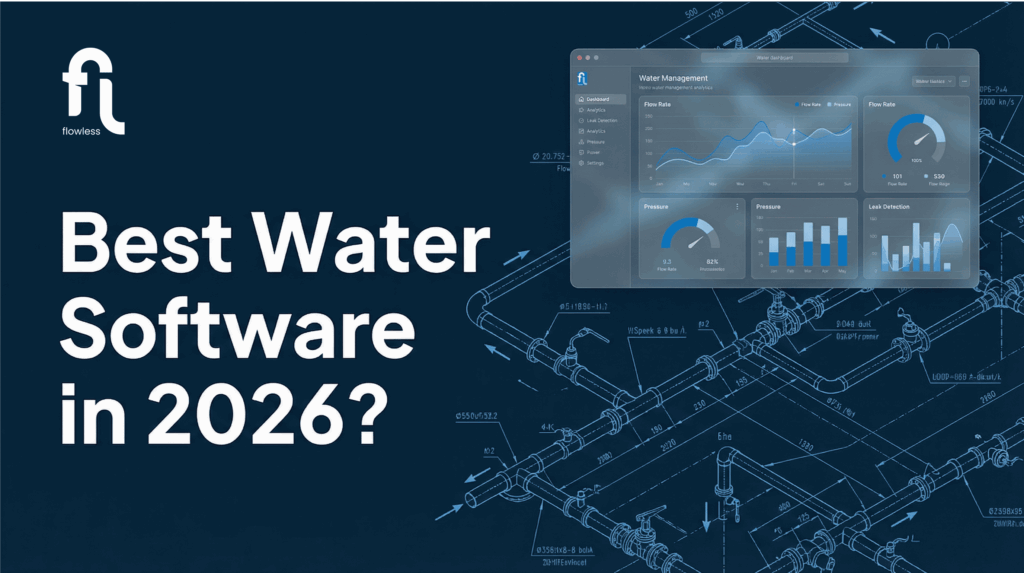
The NRW software market is crowded and confusing. Rather than ranking “the best” tools (a list written by any vendor is inherently biased), this guide gives you a practical framework for evaluating what actually matters: data integration, response workflow support, and measurable water loss reduction. We cover the major platform categories, where each fits, and the questions to ask before signing a contract.
Look — Flowless is an NRW management platform. We built it, we sell it, and we obviously think it’s good. So take our competitor assessments with a grain of salt, do your own homework, and judge us by the same framework we lay out here.
Why Most “Best NRW Software” Lists Are Useless
If you’ve searched for “best NRW software 2026,” you’ve probably noticed a pattern: every list is written by a vendor, and that vendor always comes out on top.
There’s a reason utility procurement teams ignore these articles. A comparison written by someone selling one of the products being compared isn’t a comparison — it’s a brochure with extra steps.
This guide takes a different approach. Instead of telling you which platform is “best,” we’ll walk through the evaluation framework we’d want if we were buying software rather than building it. The goal is to help you ask better questions — of us and of every other vendor in your pipeline.
What NRW Management Software Actually Does
Non-revenue water management software connects your field data — from SCADA systems, smart meters, pressure sensors, and maintenance logs — into a platform that identifies where water is being lost and helps you prioritize repairs.
The International Water Association (IWA) defines NRW as the sum of real losses (physical leaks), apparent losses (meter inaccuracy, unauthorized consumption, data errors), and unbilled authorized consumption (firefighting, line flushing). Good NRW software should help you quantify and act on all three categories, not just the leaks.
The scale of the problem is significant. U.S. water systems alone lose approximately 6.75 billion gallons of treated drinking water daily, costing utilities over $6.4 billion in uncaptured revenue annually, according to Bluefield Research’s 2025 report. Globally, NRW losses are estimated at 126 billion cubic meters per year — roughly $39 billion in lost value.
These aren’t abstract numbers. For a mid-sized utility with 30% NRW, that translates to millions in lost revenue every year — water you paid to treat and pump that never generated a cent.
The Three Platform Categories You’ll Encounter
The NRW software market isn’t one market. It’s at least three distinct categories, and confusing them is where most buying mistakes happen. We’ve written before about how AI has commoditized dashboards — the real value now sits underneath the interface, in domain expertise and data quality. That insight applies directly when you’re evaluating these categories.
Engineering and Hydraulic Modeling Platforms
These tools build detailed mathematical models of your network for planning, design, and “what-if” scenario analysis. Think of them as the engineering department’s workbench.
Examples: Bentley WaterSight, Autodesk InfoWorks, Qatium.
Strengths: Deep hydraulic simulation, integration with GIS and CAD systems, long-term infrastructure planning capability. Bentley’s WaterSight offers scenario modeling that lets engineering teams simulate the impact of valve adjustments or pressure changes before making them in the field. Qatium has carved out a strong position as an accessible, web-based hydraulic analysis and digital twin platform — useful for utilities that want network visualization and simulation without the full weight of an enterprise engineering suite.
Limitations: High technical barrier — Bentley in particular requires specialized hydraulic engineers to operate effectively, with implementation timelines stretching to months and often requiring consultants. These tools are designed for planning, not for daily operations teams responding to active leaks. Qatium is more user-friendly than traditional hydraulic tools, but its focus is hydraulic analysis and digital twin modeling rather than NRW-specific operational workflows — it’s a different tool solving a different problem.
Best fit: Tier 1 utilities with dedicated engineering departments and capital budgets for multi-year planning horizons. Qatium for utilities wanting accessible hydraulic analysis without the enterprise overhead.
Enterprise and Unified Platforms
Large-scale platforms that aim to unify multiple data streams (SCADA, GIS, IoT, billing) into a single operational view.
Examples: Xylem Vue, Veolia Hubgrade, Siemens water solutions.
Strengths: Broad coverage across operational domains. Xylem Vue brings together Xylem’s sensor and analytics portfolio into a unified platform with strong capabilities in network monitoring, water quality, and operational intelligence. Veolia Hubgrade takes a similar approach from the operations and services side. Siemens offers leak detection capabilities backed by their industrial automation expertise, which can be compelling for utilities already running Siemens infrastructure.
Limitations: These platforms often work best within their own hardware ecosystems. Xylem Vue, for instance, integrates tightly with Xylem’s own sensors and meters — great if you’re already in that ecosystem, but potentially limiting if your network runs third-party equipment. Implementation timelines and costs tend to be substantial, and smaller utilities may find themselves paying for capabilities they don’t need. If you’ve read our piece on the build versus buy decision, you’ll recognize this as the “overbuying” risk.
Best fit: Mid-to-large utilities with established DMA infrastructure and budgets for comprehensive platform investments. Particularly strong when you’re already invested in the vendor’s hardware ecosystem.
Specialized Operational Intelligence Platforms
Focused tools built for specific operational problems — typically NRW detection, pressure management, or operational monitoring. Faster to deploy than enterprise suites, designed for operations teams rather than engineering departments.
Examples: Flowless (that’s us), FIDO Tech (hardware-based acoustic AI for leak pinpointing).
FIDO Tech deserves a specific mention because they occupy a different niche: they combine proprietary acoustic hardware with AI to pinpoint leak locations with high accuracy. If your primary challenge is finding the exact spot to dig for a known leak, FIDO’s approach is strong. They’re complementary to platforms like ours rather than a direct alternative — you might use FIDO’s acoustic analysis alongside a broader NRW management platform.
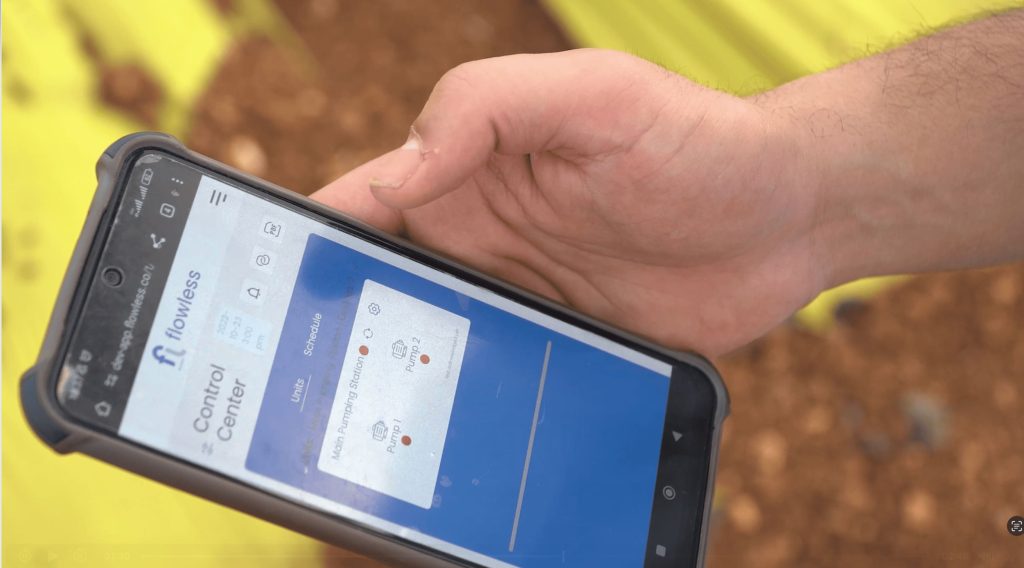
Flowless sits in this category as a full NRW management platform — covering leak detection, pressure management, digital twin visualization, and operational workflows through WaterCloud and our AI engine. Where we think we genuinely differentiate:
Hardware-agnostic from day one. We connect to whatever sensors you already have — no requirement to buy our equipment or lock into our ecosystem. If you’ve got a mix of sensor brands from different decades, we’ll work with that.
Built for operators, not just engineers. Our interface is designed so your operations team actually uses it daily, not just your most technical staff. This matters because the best analytics in the world won’t reduce NRW if nobody acts on them.
Fast time to value. We deploy in weeks, not quarters. You start seeing actionable leak detection and pressure insights while enterprise platforms are still in the data migration phase.
We’re not a hydraulic modeling suite and we’re not an ERP — if that’s what you need, look at the categories above. We’re focused on the operational intelligence layer, and we think that focus is a feature, not a limitation.
Best fit: Utilities that want to solve NRW and operational visibility fast, without a multi-year IT transformation project. Particularly effective for operations teams that need actionable daily intelligence rather than engineering-level simulation.
What to Actually Evaluate: Six Questions That Matter
Forget feature checklists. Every vendor’s feature list looks impressive. These questions cut to what determines whether a platform will actually reduce your NRW. (For the operational side of what drives NRW reduction, our guide to NRW management best practices goes deep on process and people — the stuff no software can replace.)
1. Does it connect to what you already have?
Integration capability is the single biggest predictor of success or failure. If the platform can’t ingest data from your specific SCADA system, your brand of flow meters, or your existing GIS, it doesn’t matter how good the analytics are.
Ask vendors: “Can you demonstrate a live connection to [your specific SCADA brand] pulling real data?” Don’t accept “yes, we support standard protocols” as an answer. Demand a proof-of-concept with your actual data sources.
If a vendor’s first recommendation is to replace your existing sensors or meters, that’s a signal. It might be justified, but it also means the deployment timeline and cost just expanded significantly.
2. What happens after the alert fires?
Most NRW platforms are good at detecting anomalies. The differentiator is what happens next. Does the alert give your field team enough context to act — specific location, probable cause, estimated loss volume? Or does it just say “anomaly detected in Zone 4”?
The gap between detection and repair is where NRW is won or lost. A platform that generates 200 alerts per day with insufficient context creates alert fatigue, and your operators will stop trusting it within weeks.
3. Can it distinguish signal from noise?
Your network generates data constantly — flow fluctuations from legitimate demand changes, pressure shifts from pump schedules, seasonal consumption patterns. A platform that flags every deviation will bury your team in false positives.
Look for platforms that apply domain-specific analysis rather than generic anomaly detection. Water networks have patterns — Minimum Night Flow (MNF) analysis, for example, compares actual flow during low-demand hours against expected legitimate consumption to identify real losses. This is fundamentally different from a generic AI flagging “unusual values.”
4. How fast can you see results?
The deployment timeline matters because NRW is an ongoing cost. Every month spent in implementation is another month of preventable water loss. Ask vendors for their typical deployment timeline, specifically: time to first actionable alert, time to demonstrated water savings, and time to full deployment.
5. What does total cost of ownership actually look like?
Licensing fees are just the start. Factor in implementation costs, training, data migration, ongoing support, and any required hardware. The most important cost question: what’s the cost of the status quo? If your current NRW rate costs you $2 million annually in lost revenue, even an expensive platform that reduces losses by 20% pays for itself quickly.
6. Will it still work when the vendor’s team leaves?
Post-implementation support is where many deployments fail quietly. The first 90 days with a new platform are critical — your operators need to build trust in the alerts and develop new response workflows. Ask for the support model after go-live, and critically: if you decide to switch vendors in three years, can you export your historical data?
Common Mistakes That Waste Your Budget
Having worked with utilities across four continents, we’ve seen patterns in failed deployments. The technology is rarely the problem.
Buying before fixing processes. If your team doesn’t have a defined workflow for responding to leak alerts — who gets notified, what’s the response time target, how is repair confirmed — then knowing where the leaks are won’t reduce your NRW. Fix the process first, then amplify it with technology.
Choosing based on demos. Every demo is staged. The data is clean, the dashboards are populated, and the alerts are perfectly timed. Ask for reference calls with utilities of your size and complexity. Ask those references about the implementation pain, not just the results.
Overbuying capacity. A mid-sized utility managing 15 DMAs doesn’t need an enterprise platform designed for networks with 500+ DMAs. You’ll pay for complexity you’ll never use.
Expecting technology to replace people. The best NRW platforms make operators more effective — they don’t make operators obsolete. In every deployment we’ve seen, the utilities that achieved the best results invested as much in operator training as they did in software.
Making Your Decision
There is no “best” NRW software — only the right one for your specific network, team, and operational challenges. An engineering-focused utility planning $50 million in infrastructure upgrades needs a different platform than an operations team trying to reduce leak response time from 72 hours to 24.
Start with your problem, not with vendor brochures. Define what success looks like in specific, measurable terms: NRW reduced by X percentage points, leak response time under Y hours, Z dollars in recovered revenue within 12 months.
If what you need is a platform that connects to your existing infrastructure, gives your operations team clear daily priorities, and starts delivering measurable NRW reduction in weeks rather than quarters — that’s exactly what we built Flowless to do. We’d welcome the chance to prove it with your data, on your network, against the metrics you define.
Ready to see what Flowless can do with your network data?
Baker Bozeyeh is the CEO of Flowless, an AI-powered water technology company based at Water Campus Leeuwarden. With deployments across four continents, he writes about practical approaches to water management challenges.
Frequently Asked Questions
How much can NRW management software reduce water losses?
Results vary significantly based on your starting NRW rate, network condition, and your team’s capacity to act on alerts. Utilities with NRW above 30% typically see 5–15 percentage point reductions within the first 12–18 months of a structured program combining software with operational process improvements. The economic level of leakage typically falls between 8–15% for developed markets.
Do I need new sensors to use NRW software?
Most specialized platforms can work with existing SCADA data and flow meters. New IoT sensors improve precision and coverage, but they’re not usually a prerequisite. Start with what you have, prove the value, then invest in additional instrumentation where the data gaps are most costly.
What’s a realistic implementation timeline?
Specialized SaaS platforms typically deliver pilot results in 4–8 weeks after data integration. Enterprise-scale platforms often require 6–18 months for full deployment. The variable isn’t the software — it’s the state of your data, the complexity of your integrations, and how quickly your team adopts new workflows.
How do I calculate ROI for NRW software?
Start with your current NRW volume in cubic meters, multiply by your production cost per cubic meter (including treatment, pumping, and chemical costs), and add your retail rate for the portion that could become billed consumption. A realistic target is recovering 20–30% of that within the first year. Compare that recovery against total cost of ownership for the platform.

Baker Bozeyeh
Flowless Co-founder & CEO